

Aspheric Contact Lenses: what they are and how they work
Contact lenses may look simple. However, the optical design can be surprisingly sophisticated. aspheric contact lenses use a gradually changing curvature. They do not use the same curvature from centre to edge.
This type of design can be used to manage optical imperfections such as spherical aberration and support clear, focused vision. Aspheric optics are found in several modern contact lenses, including both daily disposable and reusable lenses.
This guide explains what aspheric contact lenses are and how they work. It also covers choosing your lenses.
What Are Aspheric Contact Lenses?
An aspheric contact lens has an optical surface whose curvature changes gradually from the centre towards the edge. This differs from a purely spherical optical surface, which follows the same basic curvature throughout.
The purpose of an aspheric design is not simply to change the shape of the lens. Instead, the design can be used to control how light passes through the contact lens and enters the eye.
Manufacturers use aspheric optics to compensate for spherical aberration. This imperfection causes light rays to focus at different points.

How Do Aspheric Contact Lenses Work?
The eye itself is not a perfect optical system. The cornea and the natural lens inside the eye can introduce small optical aberrations that affect how light is focused.
With an aspheric lens, the surface curvature can change across the lens. This helps manage spherical aberration from the eye or the lens.
The goal is to direct light precisely towards the retina. The effect depends on lens design, pupil size and the individual eye. Thus, aspheric design does not provide better vision for every wearer.
What Is Spherical Aberration?
Spherical aberration occurs when light rays do not all focus at exactly the same point.
This differs from short-sightedness or long-sightedness. These are corrected using the SPH or PWR value on a prescription.
Spherical aberration is one of several higher-order optical aberrations that can influence visual quality. Its effect can become more noticeable under certain conditions, including when the pupil becomes larger in lower light.
Our guide to contact lens parameters explains common values. This includes SPH, BC, DIA, CYL, AXIS and ADD.
Potential Benefits of Aspheric Contact Lens Designs
Different contact lens manufacturers use aspheric optics in different ways, so the benefits depend on the specific lens. Potential advantages may include:
- Management of spherical aberration: Some aspheric designs are specifically engineered to compensate for average spherical aberration in the eye.
- Support for clear vision: By controlling how light is focused, an aspheric optical design may help provide sharp and consistent vision.
- Optical performance across different prescriptions: Some lens designs adjust their aspheric optics according to the power of the contact lens.
- Use in different types of contact lenses: Aspheric optics can be found in daily disposable, reusable and multifocal lens designs.
Aspheric design is only one part of a lens. Material, fit, and oxygen transmissibility are also important for suitability.
Aspheric vs Spherical Contact Lenses
Terminology can be confusing. A lens may be a spherical lens by prescription but use aspheric optics in design.
A standard lens for short-sightedness may be listed as spherical. It uses a SPH/PWR prescription. However, it may use an aspheric front-surface design.
In other words, spherical prescription and aspheric optical design are not necessarily opposites.
Examples of Contact Lenses with Aspheric Optics
Several modern contact lens ranges use aspheric optical designs. Two examples available from Netlens are Biofinity and MyDay from CooperVision.
Biofinity
Biofinity 6-pack is a reusable monthly silicone hydrogel lens. Its Aberration Neutralising System™ uses aspheric design for clear vision.
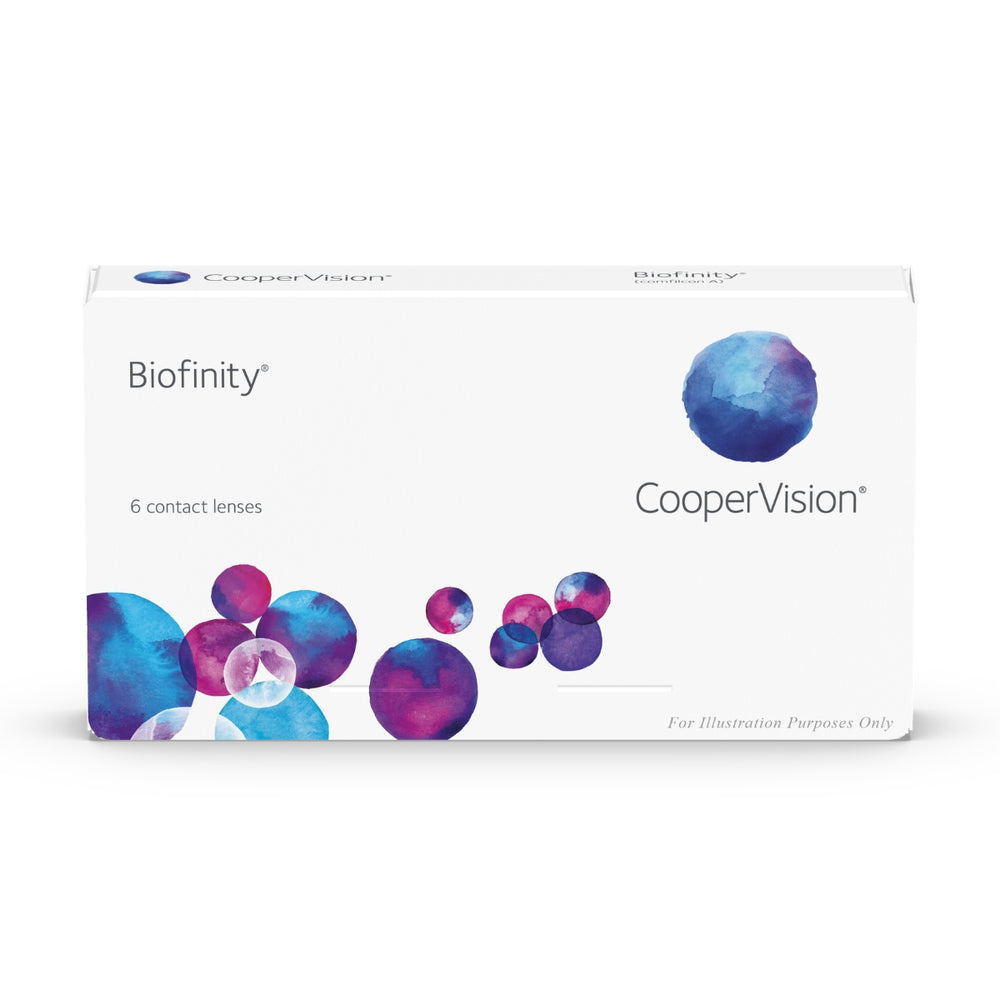
You can also explore the complete Biofinity contact lens range.
MyDay Daily Disposable
MyDay Daily Disposable is a silicone hydrogel daily contact lens. It also uses CooperVision's Aberration Neutralising System™ with an aspheric optical design intended to reduce average spherical aberration.
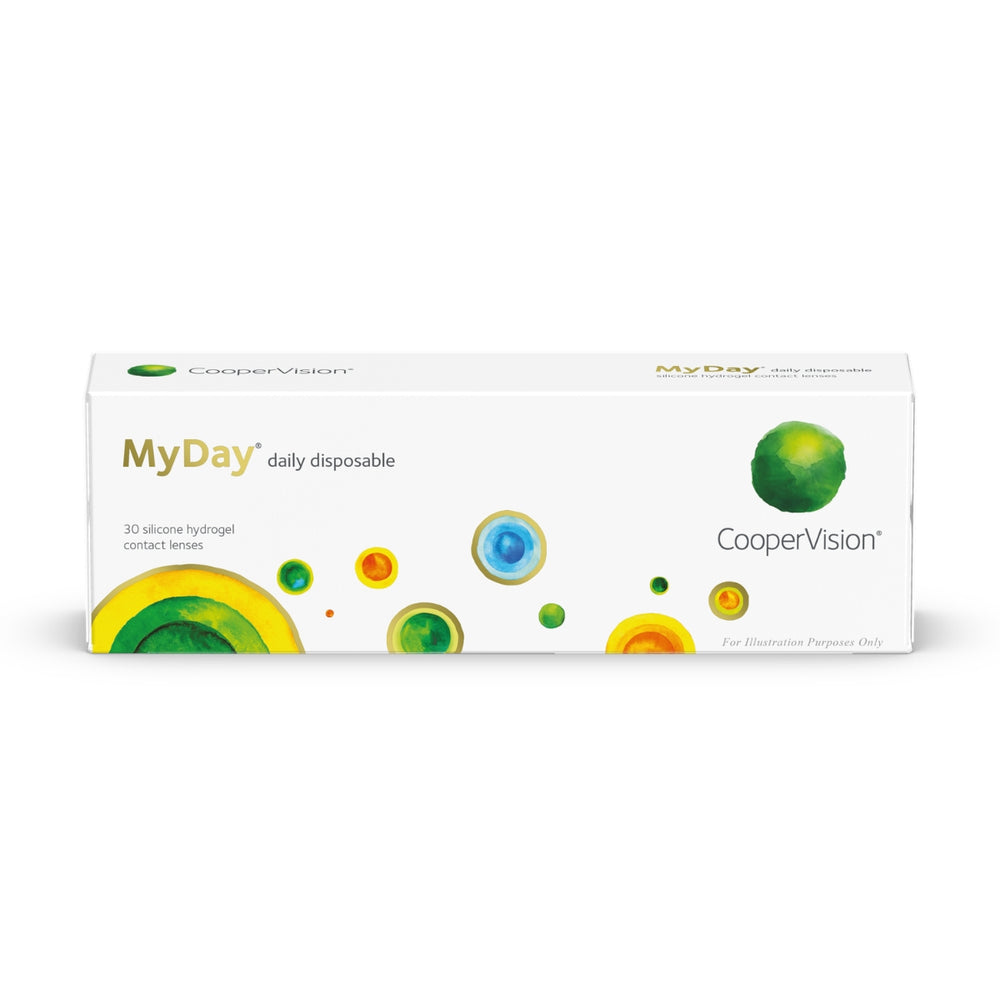
See the full range of MyDay contact lenses or browse all daily contact lenses.
Are Aspheric Lenses Available as Daily and Monthly Lenses?
Yes. Aspheric optical design and replacement schedule describe two different characteristics of a contact lens.
A lens can therefore use aspheric optics while being designed as either a daily disposable or a reusable lens.
- Daily contact lenses are worn for one day and discarded after removal.
- Monthly contact lenses are reusable and are normally cleaned, disinfected and stored between wears according to the instructions for the specific lens and care system.
The right replacement schedule depends on your prescribed model. It also depends on your lens care preferences.
Are Multifocal Contact Lenses Aspheric?
Some multifocal contact lenses use aspheric optical designs, but multifocal and aspheric do not mean exactly the same thing.
Multifocal contact lenses correct vision at multiple distances. Manufacturers use aspheric designs and various power arrangements to achieve this.
Design varies between products. Check the specifications of the individual multifocal lens instead of assuming they are all the same.
How to Choose the Right Contact Lenses
Aspheric optics are an interesting feature. However, they should not be the only reason to choose a lens.
A lens must match your prescription and fit your eye. Consider power, base curve, diameter and material.
The safest approach is to use the exact model recommended by your optician. Use the same prescription parameters.
Speak to a professional before switching to a different optical design. Similar prescription values are not always interchangeable.
Caring for Reusable Aspheric Contact Lenses
Aspheric lenses do not require a special cleaning routine simply because of their optical design. The care routine is determined by the specific contact lens and replacement schedule.
Daily disposable lenses are discarded after use and do not require overnight cleaning or storage. Reusable lenses normally need to be cleaned, disinfected and stored with a suitable contact lens solution.
Always follow the instructions provided for both your contact lenses and the care product you use.
Frequently Asked Questions About Aspheric Contact Lenses
Are aspheric contact lenses better than spherical contact lenses?
Results vary by wearer. Aspheric design manages spherical aberration, but depends on the eye. Fit and material are also important.
Can aspheric contact lenses correct astigmatism?
Aspheric design and astigmatism correction are different concepts. Astigmatism is generally corrected with toric contact lenses, which include cylinder and axis parameters. A toric lens may also incorporate additional optical design features depending on the product.
Can aspheric contact lenses be multifocal?
Yes. Some multifocal contact lenses use aspheric optical designs to distribute different optical powers across the lens. The exact design differs between manufacturers and products.
Are aspheric lenses available as daily disposables?
Yes. Aspheric optics can be used in daily disposable lenses. MyDay Daily Disposable is one example available from Netlens.
Are aspheric lenses available as monthly lenses?
Yes. Aspheric optics can also be found in reusable monthly contact lenses. Biofinity is one example.
Summary
Aspheric lenses use changing curvature across the surface. This gives manufacturers more control over how light is focused.
Aspheric design is only one element. The best lens depends on prescription, eye shape, fit and material.
If you already wear contact lenses, use the model and parameters prescribed for you when ordering. If you are considering changing lens type or brand, consult your optician or eye care professional first.
Explore our full range of contact lenses, including daily lenses, monthly lenses and multifocal contact lenses.